
The Story on Protein: How Much Do You Really Need?
If you have spent any time on social media lately, you have probably noticed a major rise in conversations about protein. Everyone seems to be talking about higher protein diets, protein powders, and hitting protein targets. So is this just another trend, or is there real science behind it?
As a functional nutritionist, I want to break down what the research actually shows and help you understand why protein matters at every stage of life, especially as we age.
Why Protein Matters
Protein plays a fundamental role in almost every system in the body. Some of its key functions include:
Supporting muscle growth and muscle repair
Maintaining strong bones
Producing enzymes and hormones
Supporting the immune system
Transporting nutrients within the body
Providing energy to cells
Helping regulate metabolism and weight management
Protein also provides the building blocks for neurotransmitters like serotonin and dopamine, which influence mental health, mood, motivation, and emotional balance.
What Happens When Protein Intake is Too Low?
Low protein intake can affect multiple areas of health:
Muscle loss, weakness, and reduced strength
Increased risk of infections due to weakened immune function
Reduced bone density and increased fracture risk
Hormonal imbalances
Fatigue, low energy, and reduced vitality
Mood changes and brain fog
Many people assume they are eating enough protein, but research shows that most adults, especially older adults, fall short. Also, unlike carbohydrates and fats, the body cannot store extra protein for later use. This means we must eat enough protein daily to maintain muscle mass, strength, and healthy aging.
Muscle Strength and Aging
Muscle strength remains stable through early adulthood but begins to decline around age 45 to 50 (Landi et al., 2017). Research shows that by age 75, compared to middle age, people may experience:
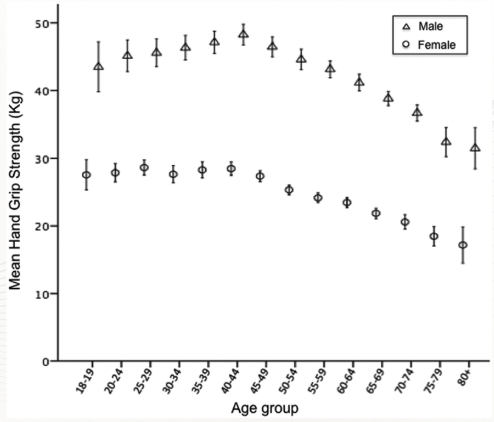
Image from Landi et al., 2017
6-7% less muscle mass
60% less muscle strength
30% lower physical performance
Loss of muscle strength is strongly associated with decreased mobility, increased disability, and higher mortality risk.
Research Connecting Aging, Mobility, and Protein Intake
The decline in muscle mass and muscle strength naturally happens as we age, which impacts balance, endurance, bone health, and overall independence. However, a growing body of research shows that protein intake plays a critical role in slowing this decline and supporting healthy aging.
Studies show that:
Adults over age 65 who consume less than 15 percent of daily calories from protein have nearly three times the risk of osteoporotic fractures (Martinez-Ramirez et al., 2012).
Older adults require roughly twice as much protein to stimulate the same muscle protein synthesis response that younger adults achieve with less protein (Kim et al., 2020). In other words, the older we are, the more protein becomes essential, not optional.
Even small increases in protein intake can meaningfully improve muscle strength, mobility, and daily function, especially when paired with strength training.
One particularly interesting study examined what would happen if protein intake increased without adding more exercise. Participants consumed a drink with 20 grams of leucine-enriched whey protein plus vitamin D, taken twice daily. After 13 weeks, these adults improved their time on the chair stand test by 1.01 seconds compared to those who drank a calorie-matched placebo (Landi et al., 2017).
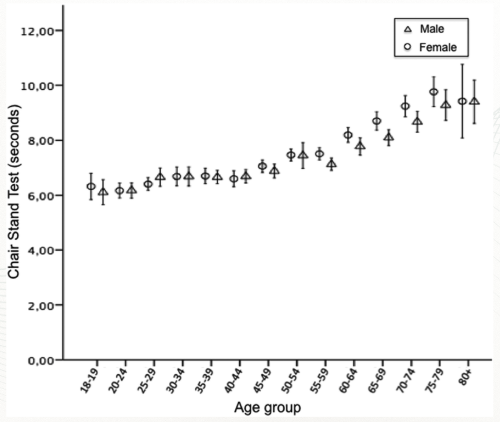
Image from Landi et al., 2017
At first glance, one second may not seem like much. However, when you look at mobility trends over time, that one second faster can place you back into a performance range associated with someone up to 10 years younger. The difference between confident balance and increased fall risk is often small but meaningful.
This research highlights an encouraging message: simple nutrition changes have the power to protect mobility, strength, and independence over time.
Try the Chair Stand Test at Home
If you are able, try this simple test to get a snapshot of your lower body strength and functional mobility.
How to do it:
Sit in a standard chair with your feet flat on the floor.
Cross your arms over your shoulders so you do not use them for assistance.
Stand up fully and sit back down.
Do this 10 times as quickly and safely as you can.
Practice a few times first to get comfortable.
Then start your timer and record your performance.
Compare your result to the chart included below.
If the result surprises you or feels slower than expected, do not worry. This is simply information and a starting point. The encouraging part is that protein intake and strength training are two of the most effective interventions to improve this score.
Exercise and Protein: A Powerful Combination
While our focus here is protein, we have to at least include exercise in the conversation. Both movement and protein are essential for preserving muscle and bone health. Helpful activities include:
Weight bearing aerobic exercise such as walking, jogging, or stair climbing
supports both cardiovascular and overall health, as well as slows the progressive loss of bone mass (Benedetti et al., 2018)
Strength or resistance training
the most important form of exercise for bone density and functional strength (Benedetti et al., 2018)
Lifting heavier weights (not just high repetitions with light weights) promotes greater improvements in muscle and bone strength.
So How Much Protein Do You Actually Need?
The current RDA recommends 0.36 grams per pound of body weight (0.8g/kg), but this is only enough to prevent deficiency, and was calculated for young healthy adults. Research shows it is not enough to optimize muscle health or metabolic function, especially as we age (Deer et al., 2016). Factors such as age, weight, body composition, health conditions, exercise habits, and more will affect how much protein is optimal for you.
A general guideline to start with: Aim for approximately 20-30% of daily calories from protein
For someone eating 2000 calories per day, this equals about 100-150 grams of protein daily.
A more detailed estimate:
Athletes: weight in pounds × 0.7-0.9 = grams of protein per day
Sedentary adults: weight in pounds × 0.8-1.0 = grams of protein per day
Older adults or those trying to lose weight: aim for the higher end
Example: For a 150 lb person, protein needs may range from 109-150 g per day depending on lifestyle and age.
Most people will be aiming for at least 100 g of protein per day, so let’s use that as an example.
How to Reach 100 Grams of Protein Per Day
Aim for 30+ grams of protein per meal.
This is especially important at breakfast to shift your body out of overnight muscle breakdown mode.
Upgrade your snacks: Many snacks are high in carbs and fat. Swap them for high protein options such as:
Greek yogurt
Cottage cheese
Edamame or hummus
Epic bars
Protein shakes or powders (choose clean ingredient options)
Use supplements thoughtfully:
While we want to get our nutrients from whole foods first, high-quality protein powders or drinks can help fill in the gaps. Avoid powders with artificial sweeteners like sucralose or aspartame. We recommend Truvani for a vegan-friendly option or our grass-fed whey from New Zealand.
Celebrate progress: This is just a starting point. Start with being more thoughtful and intentional about getting more protein and celebrate any improvement you can make!
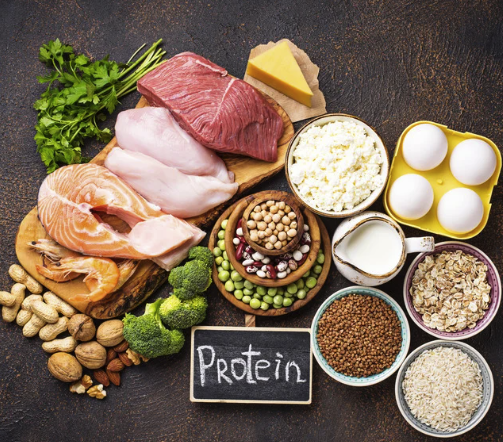
Examples of Foods That Provide About 30 Grams of Protein
Animal Sources
4 oz chicken breast, pork chop, or ground turkey
1 can tuna
5 oz ground beef
Eggs
It takes 5 eggs to reach 30 g, so combine eggs with cottage cheese, turkey, or beans.
Dairy
1.5 cups Greek yogurt
1 cup cottage cheese
Plant Sources
1.5 cups cooked lentils
2 cups black beans
1.5 cups tofu
1.5 cups edamame
Note: Plant protein is less absorbable, so plant-based eaters often need to aim above the target to really get enough.
Final Thoughts
Protein is a cornerstone of healthy aging and total wellness. It supports muscle strength, bone health, metabolism, immune function, and mental well-being. Increasing your protein intake can have a profound impact on how you feel today and how you function as you age.
Try This Week:
Get at least 30 grams of protein at each meal
Prioritize high-protein snacks
Aim for 100+ grams per day depending on your needs
If you want personalized guidance, we would be happy to help you determine your ideal protein intake and create meal strategies that work for your lifestyle.
References:
Benedetti, M. G., Furlini, G., Zati, A., & Letizia Mauro, G. (2018). The Effectiveness of Physical Exercise on Bone Density in Osteoporotic Patients. BioMed research international, 2018, 4840531. https://doi.org/10.1155/2018/4840531
Deer, R. R., & Volpi, E. (2015). Protein intake and muscle function in older adults. Current opinion in clinical nutrition and metabolic care, 18(3), 248–253. https://doi.org/10.1097/MCO.0000000000000162
Kim, D., & Park, Y. (2020). Amount of Protein Required to Improve Muscle Mass in Older Adults. Nutrients, 12(6), 1700. https://doi.org/10.3390/nu12061700
Landi, Francesco, MD, PhD, et al. (2017). Age-related variations of muscle mass, strength, and physical performance in community-dwellers: Results from the milan EXPO survey. Journal of the American Medical Directors Association, 18(1), 88.e17-88.e24. https://doi.org/10.1016/j.jamda.2016.10.007
Martínez-Ramírez, M. J., et al. (2012). Protein intake and fracture risk in elderly people: A case-control study. Clinical Nutrition (Edinburgh, Scotland), 31(3), 391-395. https://doi.org/10.1016/j.clnu.2011.11.016