
Omega-3: Why It Matters for Your Brain, Heart, and Gut Health

At Gutwell Medical, we focus on identifying root causes of inflammation and supporting healing through evidence-based care. One of the most common nutrient deficiencies we see in patients is omega-3 fatty acids. These powerful anti-inflammatory fats play a critical role in brain function, cardiovascular health, immune balance, and even digestive wellness. Yet more than 90% of Americans do not consume enough omega-3 daily.
In this blog, Dr. Harris covers what omega-3 is, how it benefits your body, how to tell if you are deficient, and how to choose the right foods and supplements to reach optimal levels.
What Are Omega-3 Fatty Acids?
Omega-3s are essential polyunsaturated fats, meaning the body cannot make them on its own. We must obtain them through food or supplementation. There are three main types of omega-3 fatty acids:
ALA: Alpha-linolenic acid
Primary Source: Plant foods (chia, flax, walnuts). NOTE: Must be converted into EPA/DHA; very low efficiency
EPA: Eicosapentaenoic acid
Primary Source: Fatty fish, fish oil
Key Benefit: Supports cardiovascular and inflammatory pathways
DHA: Docosahexaenoic acid
Primary Source: Fatty fish, fish oil
Key Benefit: Supports brain, cognitive function, and fetal development
Although plant foods contain ALA, the body converts less than 5% of ALA into EPA and DHA. For this reason, plant-based omega-3 sources do not provide adequate amounts for cognitive or cardiovascular benefits on their own.
How Omega-3 Supports Health
Omega-3 fatty acids are incorporated into cell membranes throughout the body. They are essential for:

Reducing chronic inflammation
Supporting brain neurotransmitter function and emotional wellness
Protecting the heart and blood vessels
Supporting immune and gut mucosal health
Maintaining healthy skin, nails, hair, and eye lubrication
Reducing triglycerides and supporting healthy cholesterol
Supporting fetal and infant brain development
Reducing risk of cognitive decline with aging
Improving symptoms in autoimmune and inflammatory conditions
Research has shown that optimal omega-3 intake may also improve symptoms of depression, ADHD, migraines, and asthma.
How to Know if You Are Low in Omega-3
The most accurate way to assess omega-3 status is through an Omega-3 Index blood test.
Many labs consider above 5.4% adequate.
Clinical research shows optimal levels are actually 8–12%.
A level below 4% is associated with increased risk of cardiovascular disease, mood disorders, chronic inflammation, and slower recovery after injury.
Common Signs of Omega-3 Deficiency
Dry, itchy, or flaky skin
Dull, brittle hair or hair shedding
Brittle or peeling nails
Joint pain, stiffness, or arthritis
Fatigue, poor sleep, or mood fluctuations
Brain fog, memory difficulties, or poor concentration
Dry eyes or headaches
If these symptoms look familiar, testing your omega-3 index is recommended.
Food Sources of Omega-3
The best sources of bioavailable omega-3 (EPA and DHA) are fatty fish. While plant sources are beneficial for fiber and antioxidants, they should not be relied on for omega-3 conversion.
Highest Omega-3 Fatty Fish (per ~3 oz serving)
More than 1,000 mg EPA + DHA:

Salmon (Atlantic, Coho)
Trout
Mackerel (Atlantic/Pacific)
Sablefish (Black Cod)
Herring
Anchovies
Pacific Oysters
500–1,000 mg:

Barramundi
Mussels
Alaskan Pollock
Crab
Sea Bass
Tuna (Albacore)
Less than 250 mg:
Cod
Haddock
Shrimp
Tilapia
Mahi Mahi
Because larger fish accumulate more heavy metals, choose smaller, wild-caught, sustainably sourced fish when possible. Selenium-rich foods (such as 2–3 Brazil nuts per day) help counterbalance mercury exposure from fish consumption.
Omega-3 Supplements: What to Look For
Not all fish oil supplements are created equal. The form of omega-3 determines how well your body absorbs it.
Forms of Omega-3 Supplements
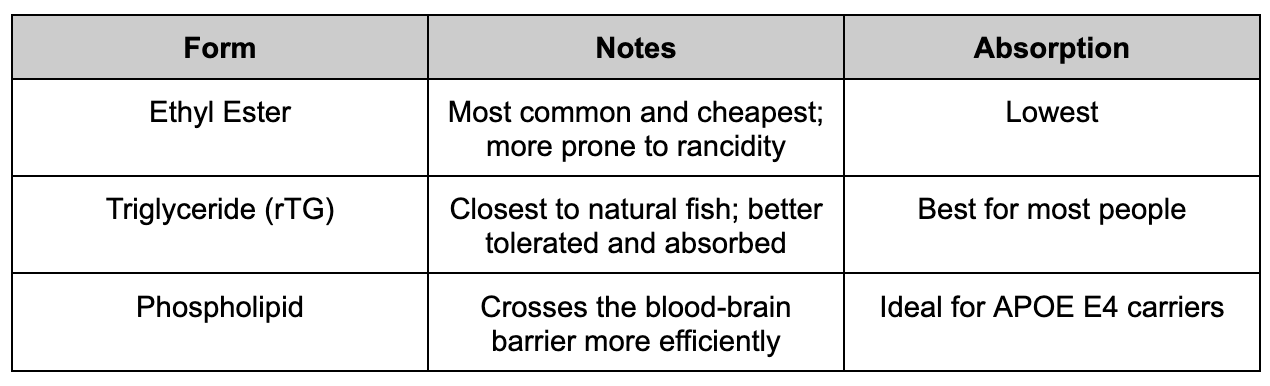
If you are vegan, algal oil is the best source of DHA/EPA, but dosing generally needs to be higher to reach optimal blood levels.
Third-Party Testing
Fish oil is notorious for going rancid quickly, which is influenced by the sourcing and storage of the fish oil. Rancid fish oil can actually cause inflammation and do the opposite of what we’re aiming for. Choose supplements verified by:
IFOS (International Fish Oil Standards)
NSF Certified
GOED Member Brands
Examples of consistently reliable brands include Nordic Naturals and Carlson, among others. We sell several high-quality omega 3 supplements you can check out here.
Reading a Supplement Label
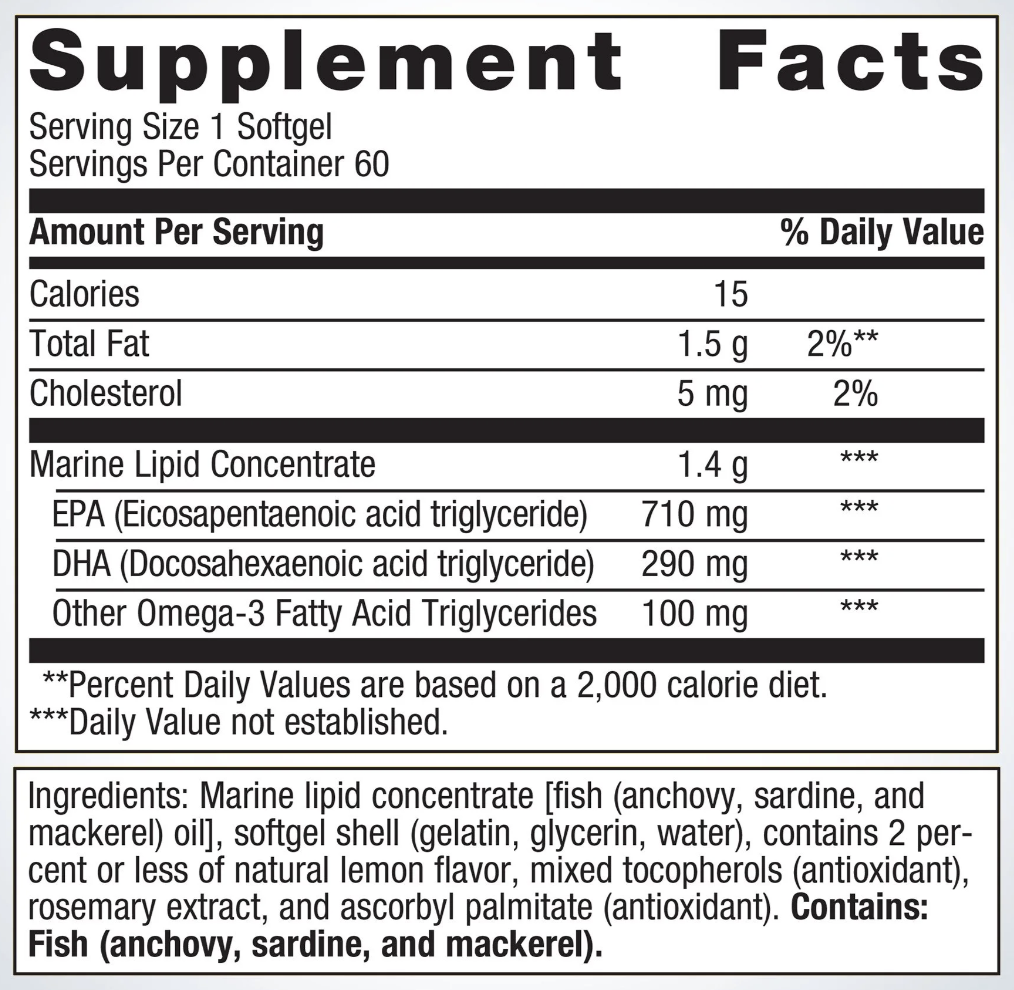
Read closely as many companies will list the total amount of fatty acids, but what you want to look for is the total from DHA and EPA. So this product has 710 + 290 = 1000 mg = 1 g of omega-3 from EPA and DHA.
Look for clean ingredients as well. You do not want to see ingredients such as carrageenan which may promote inflammation in the gut.
How Much Omega-3 Do You Need?
The recommended daily intake of 250–500 mg EPA + DHA is a minimum, not an optimal therapeutic dose. Most adults need 2–3 grams per day for at least 12 weeks to reach an Omega-3 Index of 8%.
After reaching optimal levels:
Continue 1–2 grams daily or
Eat high-omega-3 fish 5–6 times per week
Retest every 3–6 months to monitor progress.
Also Important for Brain & Nervous System Health
Omega-3 works synergistically with:
Vitamin D (optimal level: >40 ng/mL)
Magnesium
B-vitamins
Iron
Vitamin C
A healthy gut microbiome
Testing and improving these nutrients can significantly enhance cognitive, mood, and immune benefits.
How to Increase Omega-3 Levels Effectively
Increase intake of omega-3 rich fish or supplement with a high-quality fish oil.
Reduce excess omega-6 intake, especially from fast food, fried food, packaged snacks, and industrial oils (corn, soybean, safflower, sunflower). Omega-6 fatty acids compete with omega-3 for absorption.
Test levels, supplement accordingly, and retest to confirm absorption.
Bottom Line
Omega-3 fatty acids are foundational to heart, brain, immune, and digestive health. Because dietary intake for most people is insufficient, many benefit from supplementation and increased fatty fish consumption. The best-absorbed form for most individuals is triglyceride-based fish oil, with phospholipid-based options ideal for those with APOE-ε4 variants. Regular testing ensures your levels are truly optimal, not just “normal.”
If you are unsure where your levels stand or which supplement is appropriate, we can help you assess your omega-3 index and develop a personalized diet or supplement plan.