
Dr. Mitchell’s Cardiac Journey
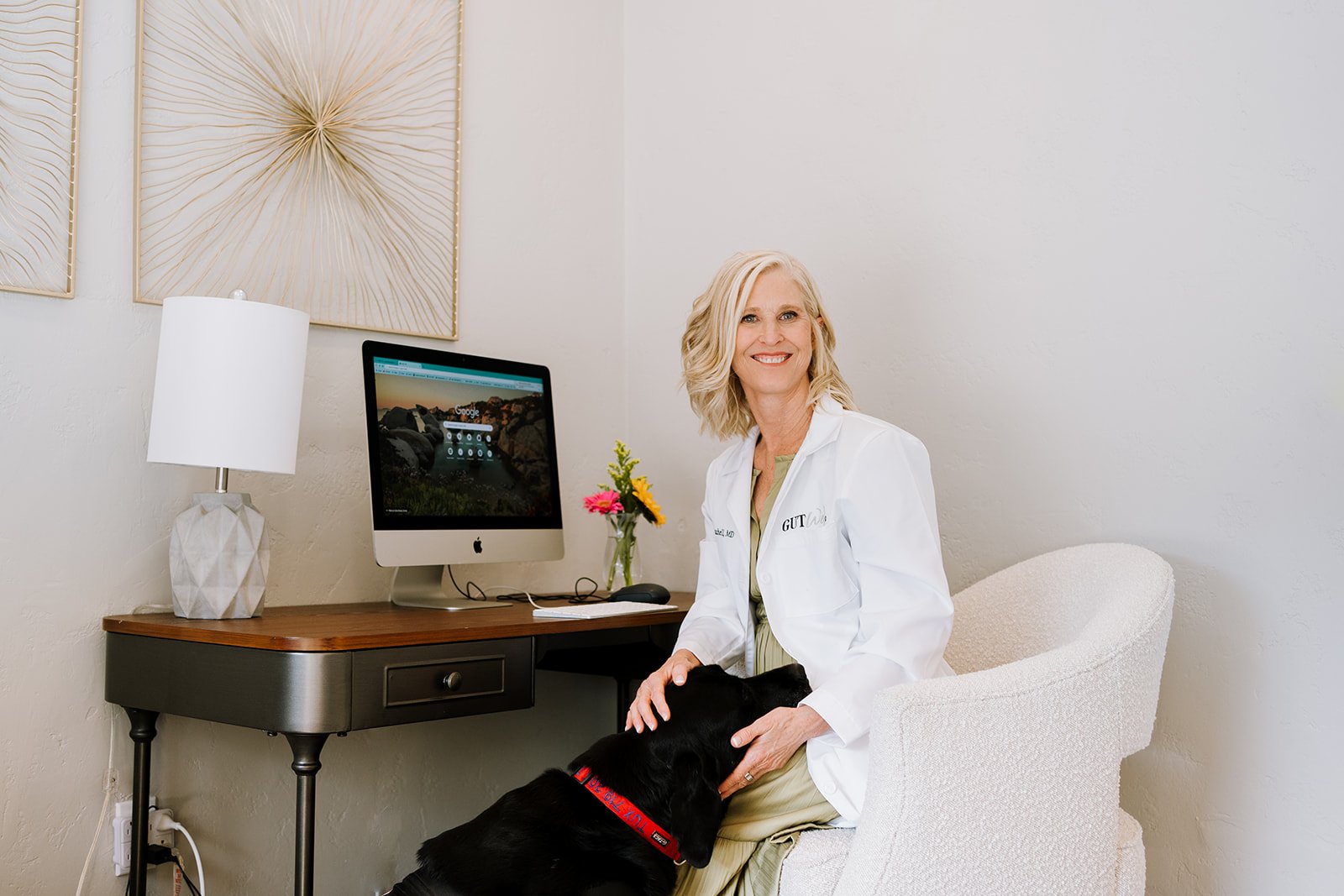
Why Preventative Cardiac Care Matters to Me – And Why It Should Matter to You
For more than 25 years, I practiced as a gastroenterologist specializing in conditions like Inflammatory Bowel Disease (IBD), Irritable Bowel Syndrome (IBS) and motility disorders. I loved the work and helping patients find relief.
But in 2019, everything changed when I was introduced to functional medicine’s holistic approach to the microbiome and more specifically, the role it plays in gastrointestinal disease and whole-body health and wellness.
Until that point, I had never heard of functional medicine.
One of my nurse practitioners, who was in the process of becoming certified in Functional Medicine, encouraged me to attend a week-long gastroenterology course by the Institute for Functional Medicine (IFM). I approached the course with a healthy amount of skepticism as this was very different from my traditional gastroenterology training.
The research and data they presented during the week was fascinating and yet I was stunned that I had not encountered this information in my peer- reviewed GI journals. Throughout the week, I found myself fact-checking nearly everything that was taught.
The Turning Point: Discovering Functional Medicine
By the end of the week, I realized the only research literature I’d been reading was strictly related to gastroenterology. As I started looking deeper, I discovered that the evidence was there, and I just hadn’t been exposed to it. For example, nutritional approaches and the science of the microbiome were rarely mentioned in gastroenterology journals.
That moment sparked a whole new journey for me. I started a partnership with Dr. Margaret Harris PhD, an Associate Professor of Human Physiology and Nutrition University of Colorado Springs (UCCS), who was also trained in functional medicine. We began collaborating on nutritional approaches and the impact of nutrition on the microbiome. I teamed up with graduate students and registered dietitians, and I began practicing a more holistic, team-based approach within my traditional GI practice.
As I dove deeper into functional medicine, I became aware of the availability of advanced functional lab panels and especially comprehensive preventative cardiac panels. Heart disease is the number one cause of death in this country, and it runs in my family. My mother had a heart attack at 62 with no prior symptoms. I knew how important it was to detect cardiac disease early before presenting with life threatening symptoms, and I decided I wanted to understand my risk of disease further.
A Personal Wake-Up Call: My Heart Health Journey
I began by ordering a complete wellness blood panel including advanced cardiac labs. The results were alarming: my LDL and Apo B were elevated as was my Lipoprotein(a), or Lp(a). Lp (a) is a hereditary type of cholesterol that significantly increases the risks of heart attacks when elevated. Seeing these results was unsettling, but for the first time my family history of heart disease began to make sense.
I did not want to wait for symptoms and decided that I wanted to gather all the data available so I could take a proactive, comprehensive approach to my heart health.
My work up began with a CT calcium score, which showed elevated calcifications in my right coronary artery-the very same artery involved in my mother’s heart attack. This was another wake up call. My risk of a heart disease was likely much higher than I had assumed for a healthy, active person.
Around this time, I was reading the book Outlive, and was following the recommendations for comprehensive preventative testing. The book discusses a more sophisticated test for determining cardiac risk called a cardiac CTA (computed tomography angiography). This is a test that visualizes coronary arteries and can detect plaque and show narrowing of the coronary arteries. Unlike the CT calcium score, which only shows hard calcified plaque along the wall of the artery, a CTA provides a more detailed picture of soft plaque which is the cause of coronary artery narrowing and can lead to heart attacks.
I scheduled my first CTA at a local hospital, and the results showed only minimal narrowing of my coronary arteries including the right coronary artery. This was great news.
Because I had access to vascular screenings at my office, I had a screening carotid ultrasound which revealed my vascular age was similar to a 90 year old. This was yet another wake-up call. I began implementing strict dietary changes, exercise, supplements, and eventually even adding in a statin.
A year later I had another CTA scan (clearly, my anxiety was still present), which showed no change. Despite this reassurance, my anxiety persisted, and a year after that I underwent a third CTA, all at the same hospitals. This scan surprisingly showed an 85 % occlusion in my right coronary artery and the report recommended an urgent consultation with a cardiologist.
Unfortunately it took me several months to get an appointment with a cardiologist which took my anxiety to a new level. . When I saw the cardiologist, he presented me with two options: 4 medications for the rest of my life or undergo a heart catheterization. I chose the heart catheterization. To my immense relief, the cardiac catheterization only showed minimal narrowing of the right coronary artery. In other words, the CTA result had been what we call in medicine a “false positive” reading.
What I have since learned is that the accuracy of a cardiac CTA is highly dependent of the type of CT scanner that is used. Most hospital-based scanners require a longer time to capture images, which means that patients receive a moderate amount of radiation for a single test, and the image quality can be compromised by cardiac motion.
Newer CT systems, such as the Spotlight Duo Cardiac CTA by Arineta, are capable of capturing images in a fraction of the time, essentially the length of time of a single heartbeat. This results in a markedly higher image quality while using substantially less radiation compared to hospital -based scanners.
Even more impressive, when narrowing is identified in the coronary arteries by CTA, these scans can be analyzed using advanced AI software such as Cleerly. This technology characterizes plaque composition (soft, calcified, or fibrous) and provides a precise map of plaque location and percent narrowing across all visualized coronary arteries.
There are currently only 2 single-beat (minimal radiation) cardiac CTA scanners in Colorado.
Recently I travelled to Loveland, Colorado (Clear Heart and Lung Imaging) to undergo the single-beat CTA with Cleerly plaque analysis. While I still have no concerning arterial narrowing, I now have a detailed road map of both my soft and hard plaque throughout my heart. As a result, I have been able to refine my cardiac medications, and make more targeted lifestyle, nutritional, and supplement changes. I have been able to markedly reduce my vascular age confirmed by carotid ultrasound and have optimal lipid and cardiac inflammation laboratory profiles. I will repeat this test in 3 years.
Preventing Heart Disease: It’s Never Too Early to Start
While I wish this technology had been available earlier in my journey, I am deeply grateful that my experience has led me here. It has renewed my commitment to cardiac prevention, motivated me to pursue strength training more intentionally and even inspired me to start running again.
We don’t have to wait for a heart attack to begin caring for our hearts. Prevention can start now by understanding your risk, monitoring meaningful markers, and making sustainable lifestyle changes. At Gutwell, I hope to walk alongside my patients in that process, offering guidance and support every step of the way.